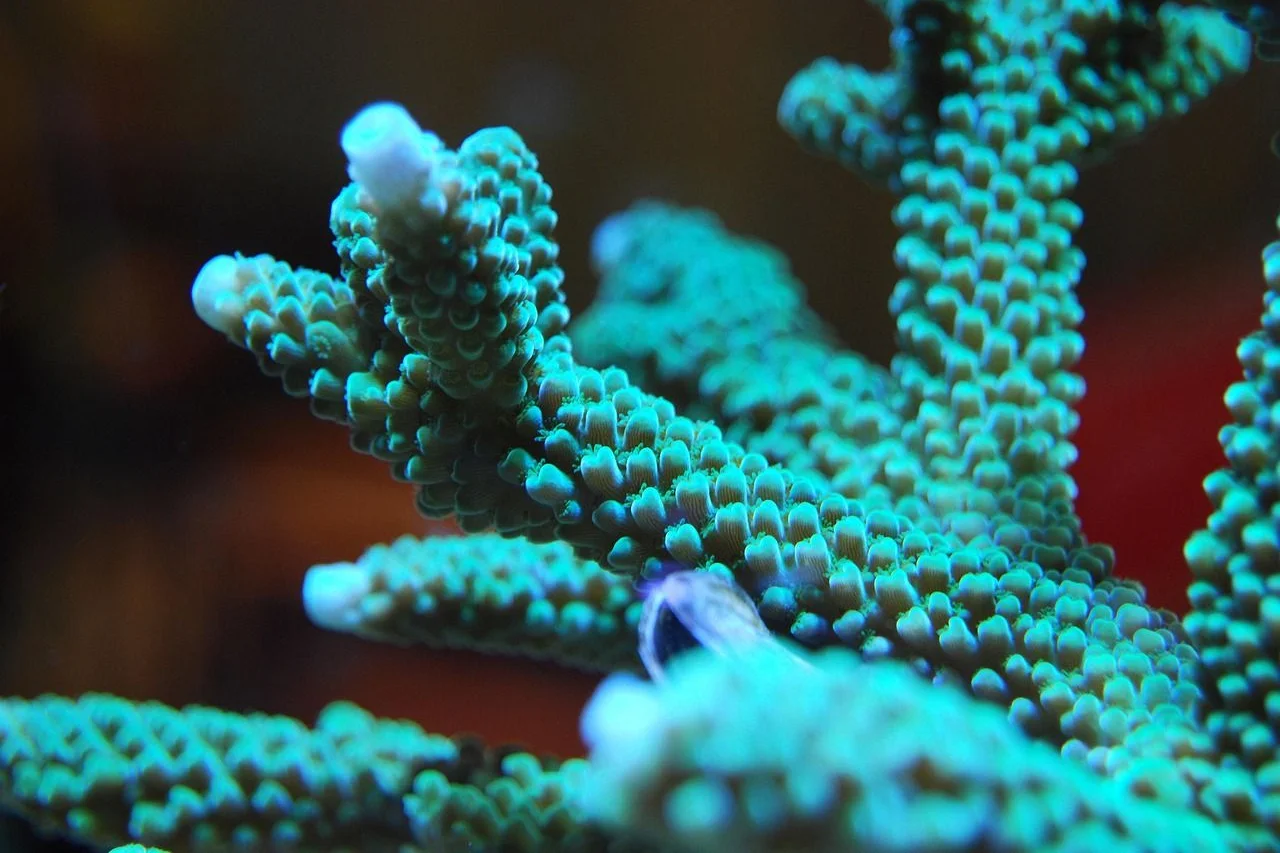
Most of us have seen pictures of bleached coral: reefs turned ghostly white after a marine heatwave.
But a bleached reef is a snapshot. The bigger question is what repeated heat stress means for coral species themselves, and whether some could disappear altogether.
A new global reassessment published in Nature gives the clearest answer yet. About 44% of reef-building coral species are now threatened with extinction, and their risk is rising faster than that of any other group of species scientists track this way.
Specialists reassessed 892 reef-building coral species
The study was carried out by the IUCN Species Survival Commission Coral Specialist Group, led by David Obura (CORDIO East Africa, Kenya), Beth Polidoro (Arizona State University) and Francoise Cabada-Blanco (University of Portsmouth), with more than 60 coral experts worldwide.
They reassessed all 892 reef-building coral species on the IUCN Red List, the global standard for judging extinction risk. The first such assessment was done in 2008. Preliminary results were announced at the COP29 climate conference in 2024; this is the full, peer-reviewed analysis.
Counting individual coral species across the world’s reefs is impossible. So the team estimated how populations are changing by combining:
- Global trends in coral cover, how much of the reef is living coral, over three decades
- Projected severe bleaching, under a middle-of-the-road warming scenario, over the next three decades
- Species traits that make some corals more vulnerable, such as how they grow and reproduce
44% of the species with enough data are now threatened
Of the 774 species with enough data to classify, 340 (44%) are threatened:
- 33 Critically Endangered
- 251 Endangered
- 56 Vulnerable
In 2008, about one third were threatened.
Climate change dominates. It determined the status of more than 90% of the species at highest risk.
Some groups are hit especially hard. Among the Indo-Pacific Acroporidae, the staghorn, plating and encrusting corals that build much of a reef’s three-dimensional structure, 68% (191 of 279 species) are Endangered. Atlantic corals fare worse overall than Indo-Pacific ones: 50% threatened versus 43%.
Risk is rising faster than for any other group. The coral Red List Index, a summary score where 1 means no species at high risk and 0 means all extinct, fell from 0.96 before 1998 to 0.89 in 2008 and 0.74 in 2024. That’s the fastest decline of any group assessed this way, including mammals, birds, amphibians, sharks and rays, and cycads.
Heat breaks the partnership corals live on
Reef-building corals live in partnership with tiny algae inside their tissues. The algae photosynthesise and supply most of the coral’s food, and give corals their colour.
When water gets too warm for too long, that partnership breaks down. The coral expels the algae, turns white, and starts to starve. Corals can recover if temperatures drop in time, but repeated or prolonged heat kills them. As bleaching becomes more frequent, there’s less time to recover between events.
That’s why bleaching isn’t just about how reefs look. When the branching and plating corals that form a reef’s structure die, the fish and other animals that depend on that structure lose their habitat, and so do the people who rely on reefs for food, income and coastal protection.
The picture is probably worse
The assessment uses data up to 2020. Since then:
- 2023 to 2025 brought the three hottest years on record and the fourth global coral bleaching event.
- Global warming briefly passed 1.5°C for a full year.
- A strong El Niño is developing in 2026–27, which typically warms tropical seas further.
The authors say the true share of threatened species is likely higher than 44%.
What the study doesn’t show
- Most risk estimates are modelled. They rely on coral-cover trends and bleaching projections, not direct counts of each species.
- “Threatened” isn’t “doomed”. The Red List ranks relative extinction risk; it doesn’t predict whether or when a species will disappear.
- 118 species couldn’t be assessed for lack of data.
- Responses vary. Some corals and some regions cope with heat better than others, and that variation isn’t fully captured.
- Cold-water corals in deeper seas weren’t included; their assessment is ongoing.
Coral risk is broad, accelerating and driven by warming
The reassessment turns a familiar story, bleached reefs, into a measurable trend in extinction risk across hundreds of species. It shows the risk is broad, accelerating and driven overwhelmingly by warming.
The authors stress that every tenth of a degree of warming avoided helps. Responses to heat differ between species and places, so limiting warming preserves more coral diversity and more chances for corals to adapt.
Nearly half of the corals that build the world’s reefs are now at elevated risk of extinction, and that risk is rising faster than for any other group of species we track.