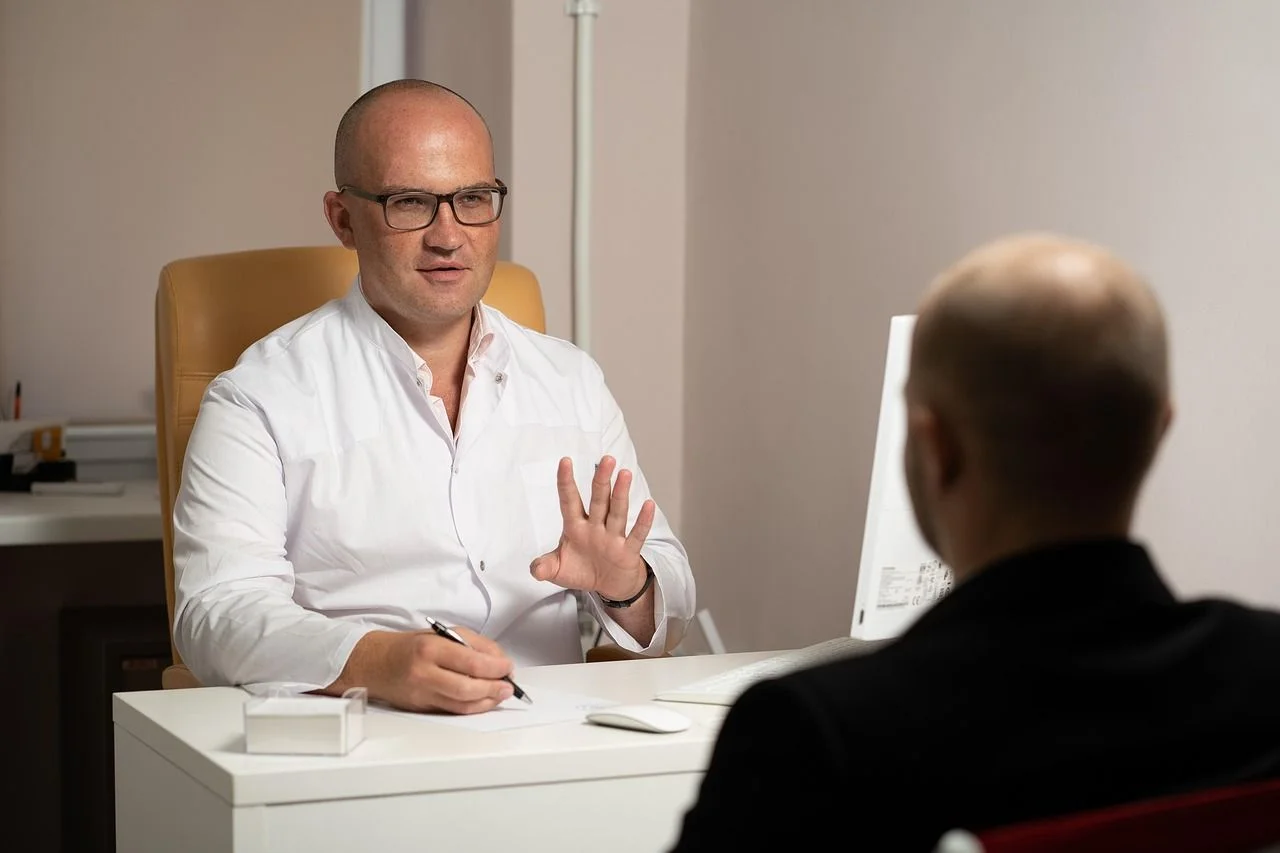
We usually think of therapy as something slow. One session a week, for months, with change building gradually.
For obsessive-compulsive disorder, a new trial suggests that compressing the work can be far more powerful. Four intensive days of therapy reduced OCD symptoms much more than eight weeks of a self-guided online program, and the gap was still large three months later.
Exposure therapy works for OCD, but access is the problem
Obsessive-compulsive disorder (OCD) involves unwanted, distressing thoughts, the obsessions, and repeated actions or mental rituals people feel driven to perform to ease that distress, the compulsions. Think of someone who can’t stop worrying about germs and washes their hands until the skin cracks, or who checks the stove dozens of times before leaving home.
The best-established psychological treatment is exposure and response prevention. People deliberately face what they fear, such as touching a “contaminated” surface, and then resist doing the compulsion. Over time, they learn that the anxiety fades on its own and that the feared disaster doesn’t happen.
The problem is access. Specialist therapy is scarce, waiting lists are long, and weekly sessions spread over months are hard for many people to keep up.
119 adults got four intensive days or eight weeks online
Lena Jelinek and colleagues at the University Medical Center Hamburg-Eppendorf in Germany ran a randomized trial, published in JAMA Network Open.
They enrolled 119 adults with OCD between May 2024 and August 2025. Their average age was about 33, and two thirds were women. Each was randomly assigned to one of two treatments:
- The Bergen 4-Day Treatment (60 people). Developed in Norway, it starts with two individual preparation sessions. Then comes an intensive block of four consecutive days in small groups of about four patients:
- Day 1: learning how OCD works and planning personal exposure exercises
- Days 2 and 3: facing feared situations in real life with a therapist’s support, plus practice alone in the evening and next morning. Relatives join a session on day 3.
- Day 4: consolidating what was learned and planning 30 days of continued self-practice
- Internet-based therapy (59 people). An eight-week, fully self-guided online program with eight modules of cognitive behavioural therapy, including one on exposure. There was technical support only, no therapist.
Both groups could keep their usual care, such as medication. Assessors who didn’t know who got which treatment measured symptoms with the Yale-Brown Obsessive Compulsive Scale (Y-BOCS), a standard clinician-rated scale from 0 to 40. Scores of 16 and above usually indicate clinically significant OCD.
The four-day group improved far more, and the gap held for three months
The four-day group improved far more. Analysing everyone who was randomized:
- Right after treatment, the four-day group’s symptoms dropped about 8 points more on the 40-point scale than the online group’s.
- Three months later, the gap was still about 6 points.
Researchers express this as an effect size called Hedges g: about 1.6 after treatment and 1.0 at three months. As a rough guide, 0.8 or more is considered a large effect in psychology, so both are large.
Among those assessed at three months:
- Responded (symptoms down by at least 35%): 61% in the four-day group, 25% in the online group. That’s about 6 in 10 people versus 1 in 4.
- In remission (a score of 12 or lower, meaning mild or minimal symptoms): 42% versus 14%, roughly 4 in 10 versus 1 in 7.
The four-day group also improved more on self-rated OCD symptoms, depression, quality of life, functioning and avoidance, though these secondary results were treated as exploratory.
Momentum may explain the difference
The trial didn’t test mechanisms, so these are possible explanations, not findings.
Momentum. Exposure therapy asks people to do something hard again and again. In a weekly format, there are six days between sessions in which old habits can creep back and avoidance can win. A concentrated format gives fewer chances to retreat.
Learning in one push. The core lesson of exposure is that anxiety rises, peaks and fades without the compulsion. Doing many exposures in a row, across different situations, may make that lesson stick faster than learning it in fragments.
Support at the hardest moment. In the four-day format, a therapist is there while people face their fears, which is when guidance matters most. The online group had to do this alone.
Focus. The Bergen method asks people to “lean into” anxiety rather than manage it, and the whole format is built around that one task.
Earlier Norwegian studies reported striking results
The Bergen 4-Day Treatment was developed by Bjarne Hansen and Gerd Kvale in Bergen, Norway. Earlier studies, mostly from Scandinavia, reported striking results.
In one example, when a different Norwegian clinic adopted the method in 2019, 94% of 35 patients responded right after treatment and about 69% were in remission three months later.
But those studies mostly had no comparison group, so they couldn’t show the treatment caused the improvement. According to the Hamburg team, only one earlier randomized trial had tested it, against a waiting list and structured self-help. The Hamburg trial is the second, and was run outside Scandinavia.
What the study doesn’t show
- It doesn’t show four days beats standard weekly therapy. The comparison was a self-guided online program with no therapist, a weaker benchmark than face-to-face therapy.
- The comparison wasn’t equal in contact. One group got intensive therapist support and the other had none, so part of the difference may come from that.
- Follow-up was short: three months.
- Dropout was uneven. Based on the numbers reported, about 1 in 4 people in the online group had no three-month assessment, compared with 1 in 20 in the four-day group. (That’s our calculation from the paper’s figures.) Response and remission rates are based on those assessed.
- It was one clinic, with therapists trained and certified by the Bergen team.
- People with some conditions were excluded, such as bipolar disorder, schizophrenia or substance dependence.
Intensive exposure programs are worth asking about
If you have OCD, it’s worth asking about intensive or concentrated exposure programs. This trial directly supports that they can work well.
Whether they’re better than regular weekly exposure therapy with a therapist hasn’t been tested here. That would be an inference, and treatment decisions should be made with a qualified professional.
Psychological change doesn’t have to be slow
OCD affects roughly 1 to 3 in 100 people, and many wait months or years for effective therapy. A treatment that delivers large improvements in a single intensive week could shorten waiting lists and fit around work and family life.
It also challenges a deep assumption: that psychological change has to be slow.
For OCD, how intensely you face your fears may matter more than how long treatment lasts.